


7 Outdated Kitchen Trends That Are Making a Comeback

Kitchen trends have a funny way of coming back around, but when they do, they rarely return exactly as we remember them.
As an interior designer specializing in complex construction projects, I’m seeing homeowners reconsider kitchen features that were written off as dated for years. Oak cabinetry, peninsulas, inset cabinets, dark countertops, eat-in kitchens and colorful cabinetry are all finding their way back into kitchen design, but in updated and much more intentional ways.
Some of these ideas are true comebacks. Others, I would argue, never really needed to disappear in the first place. They simply needed to be approached differently.
As a designer, I’m less interested in whether something is technically “in” or “out” and more interested in whether it makes sense for the home, its architecture and the people who live there.
Here are seven outdated kitchen ideas I think deserve another look.
1. Oak Cabinetry Is Back, But It Looks Different
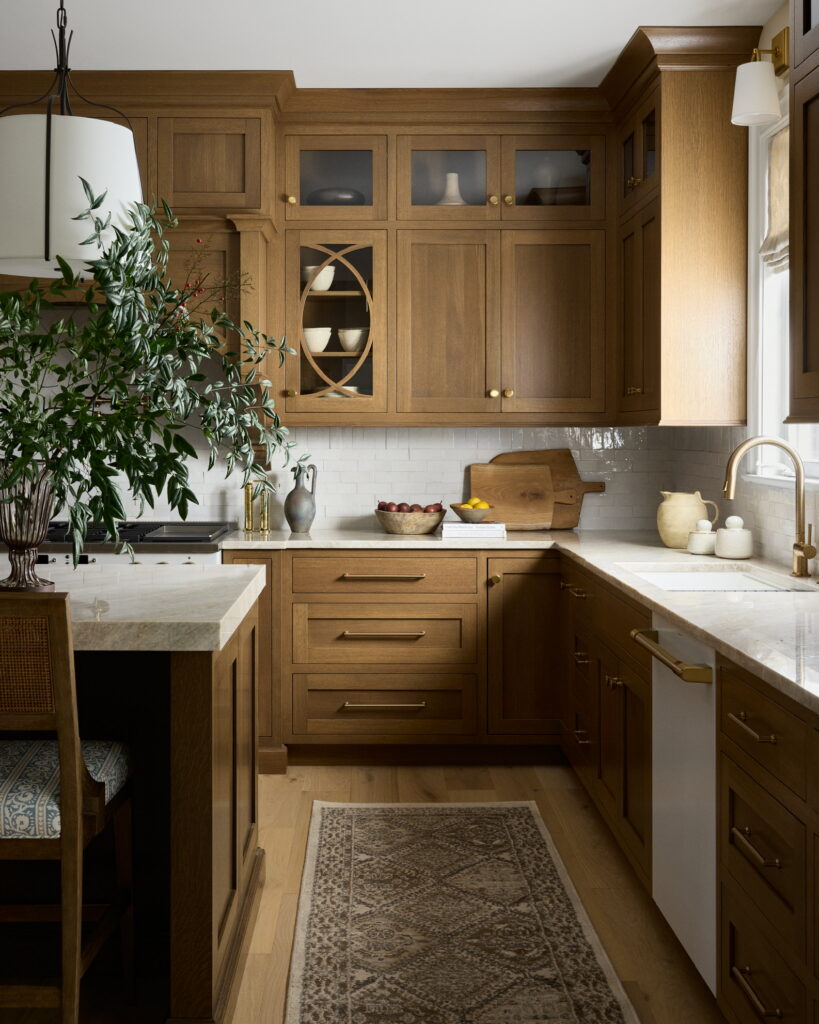
Oak kitchen cabinets are making a comeback, but today’s oak kitchens look noticeably different from the oak cabinetry of the 1980s and 1990s.
If you picture a kitchen from that era, there’s a good chance you’re picturing a lot of oak. Entire kitchens were wrapped in warm, often reddish or honey-toned wood cabinetry.
After years of painted kitchens dominating design, natural wood has made its way back.
Instead of the warmer red oak commonly associated with older kitchens, I’m seeing white oak in cooler, more natural finishes paired with cleaner and more refined cabinet profiles.
The idea of an entirely wood kitchen may not be new, but the way it’s being interpreted today is.
2. Rethinking the Kitchen Peninsula
Kitchen peninsulas were considered dated for years, but I think they deserve another look. In the right layout, a peninsula can actually be a better design solution than an island.
For a long time, I would have immediately considered a kitchen peninsula dated. The oversized kitchen island became so desirable that somewhere along the way, it started to feel like every new kitchen was supposed to have one.
But not every kitchen needs an island.
There are spaces where a peninsula simply serves the architecture and the homeowner better, and good design should always take priority over checking a trend box.
One way I particularly love rethinking the peninsula is by pairing it with a built-in banquette. The kitchen-facing side can provide cabinetry and work surface, while the opposite side transitions into an eat-in dining area.
With banquettes and built-ins becoming increasingly popular again, suddenly the peninsula doesn’t feel so dated after all.
3. The Return of Inset Cabinetry
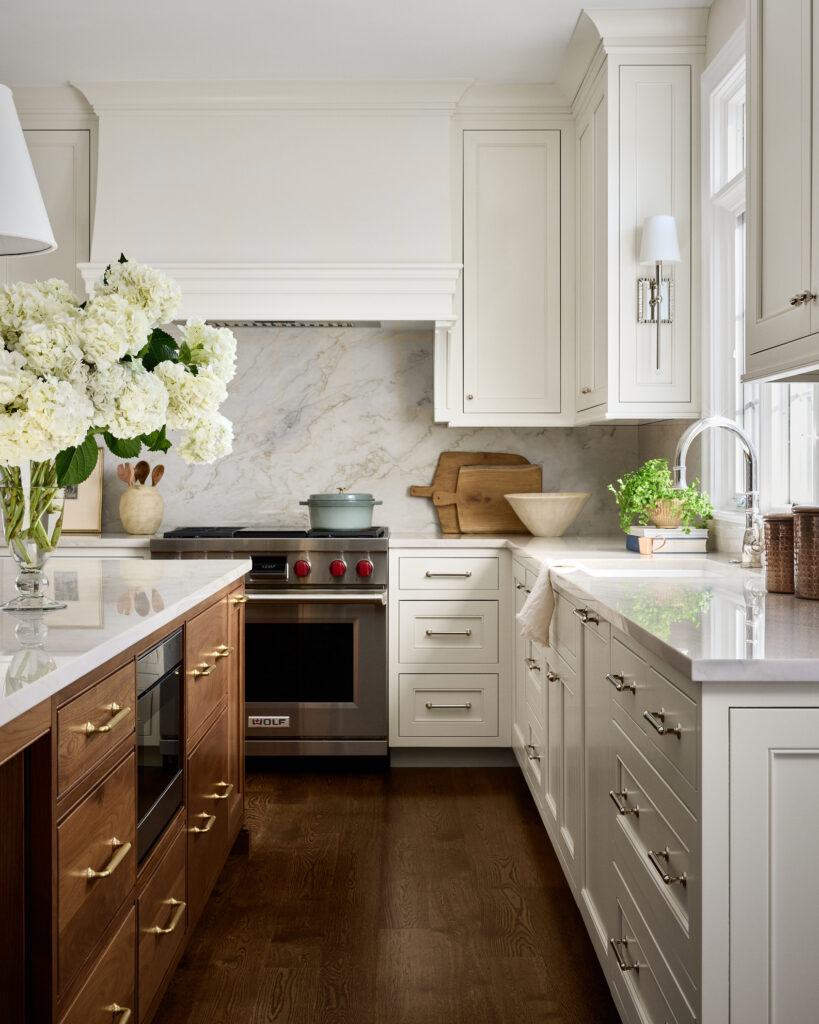
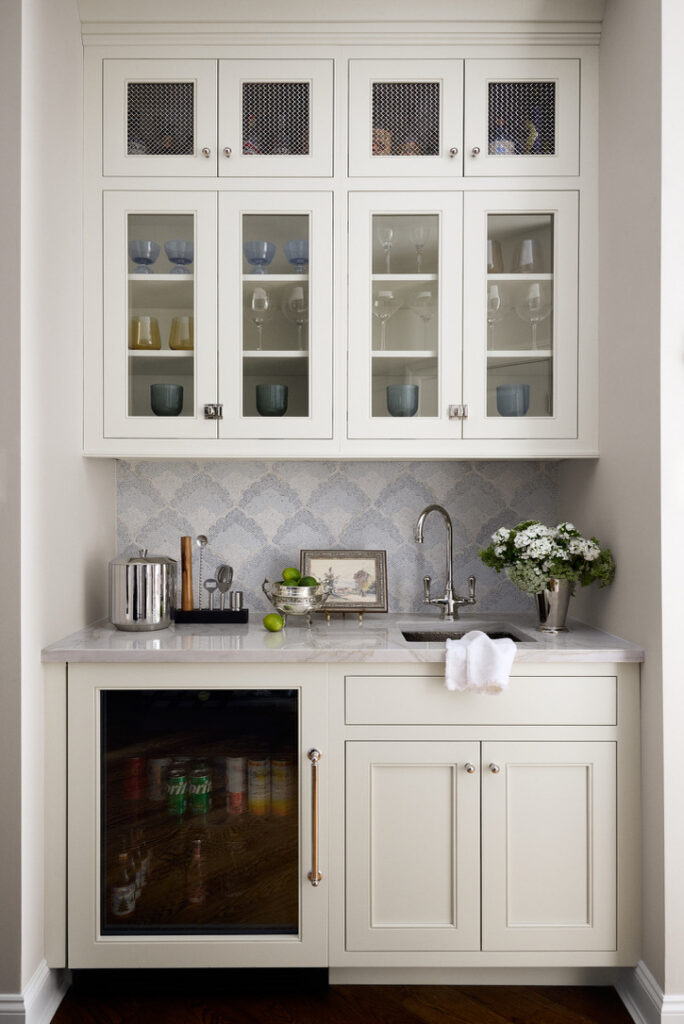
Inset kitchen cabinets are seeing renewed interest for the craftsmanship, architectural detail and furniture-like appearance they bring to a kitchen.
Inset cabinetry has deep roots in traditional cabinetmaking. Unlike overlay cabinetry, inset doors and drawers sit within the cabinet frame, creating a tailored and intentional appearance.
Today, I’m primarily seeing inset construction paired with Shaker-style doors, along with details like flush inset and beaded inset cabinetry.
To me, this speaks to a larger shift happening in kitchen design. There is a growing appreciation for character and craftsmanship again. Instead of every surface being perfectly flat and minimal, there is room for detail.
4. Dark Countertops After a Decade of White
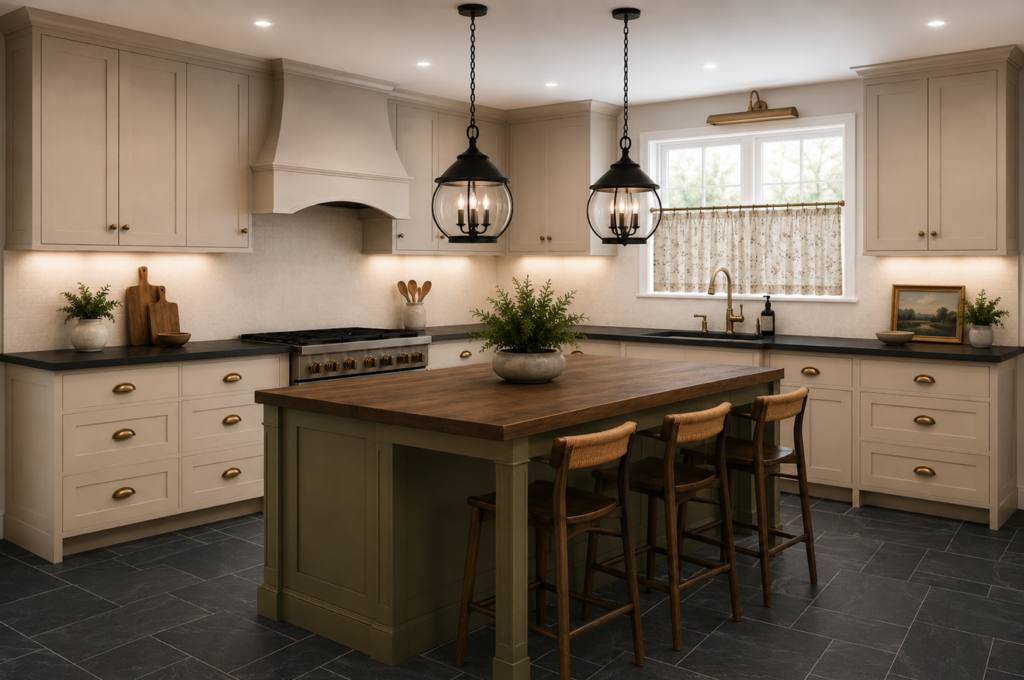
After years of all-white kitchens and white quartz countertops dominating kitchen design, darker natural stone countertops are becoming increasingly desirable.
The 2010s were undoubtedly the era of the white kitchen. White cabinetry was paired with white backsplashes and, very often, white quartz countertops.
I’m still designing light kitchens, but they are no longer the only option.
I’m seeing more interest in darker and richly colored natural stones, including soapstone, quartzite and marble. These materials bring depth, movement and contrast into a kitchen in a way that an all-white palette simply can’t.
That doesn’t mean light countertops are “out.” It means there is more room for materials with presence, variation and personality.
5. Why I’m Choosing Hardwood in Kitchens
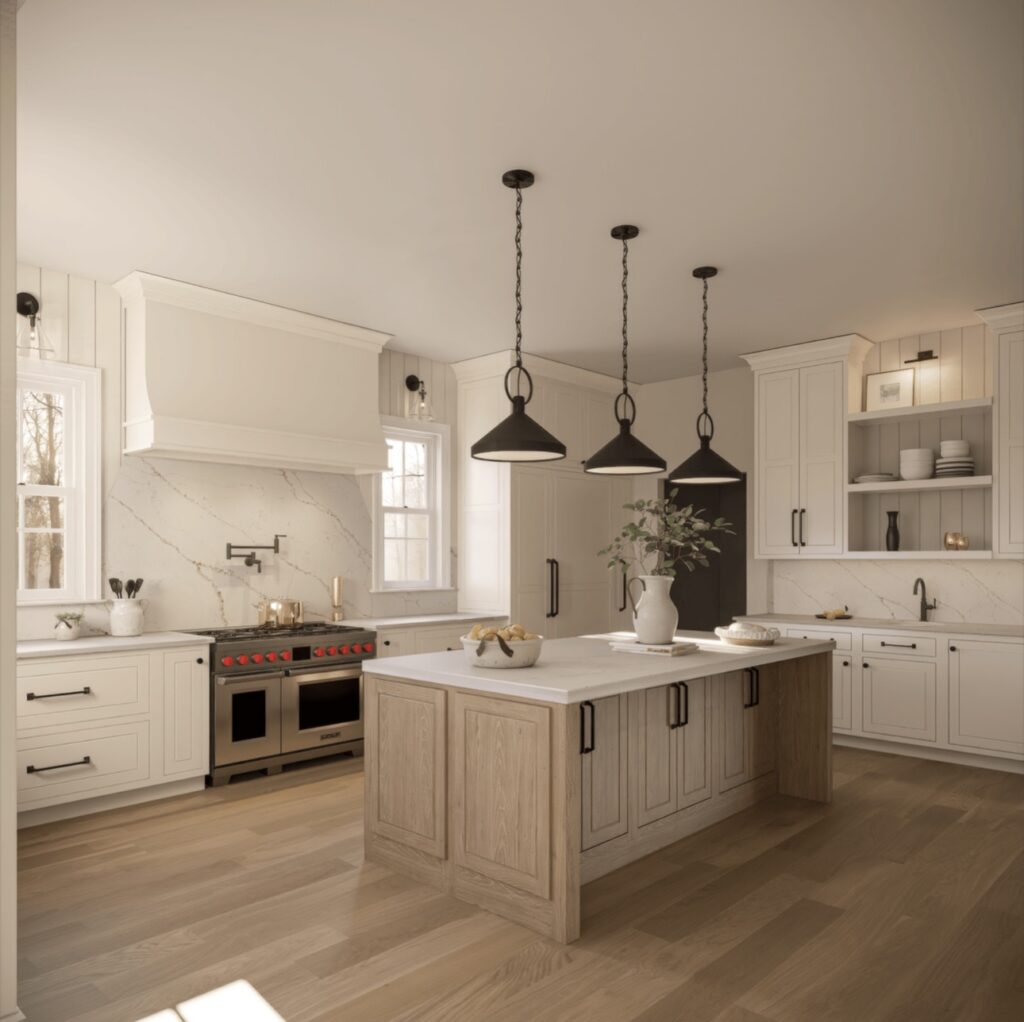
Hardwood can be an excellent kitchen flooring choice, particularly when wood flooring already runs through the adjoining spaces of the home. A kitchen doesn’t necessarily need its own flooring material simply because it’s a kitchen.
Tile had a huge moment in kitchens throughout the 1980s and 1990s, particularly the warm, Tuscan-inspired tile that became synonymous with that era. It was practical, durable and easy to justify in a hardworking space.
Today, when I’m working in homes where hardwood already runs throughout the main living areas, I often prefer to continue it into the kitchen rather than introduce an entirely different material.
This becomes particularly important in more connected floor plans. Carrying the same flooring throughout eliminates awkward transitions and allows the kitchen to feel like part of the architecture of the home rather than a separate space that requires its own set of finishes.
Sometimes the most timeless decision isn’t introducing something new. It’s simply continuing what’s already working.
6. A Return to More Defined Spaces
After years of open-concept layouts dominating residential design, I’m seeing more interest in defined rooms again. That doesn’t mean open-concept living is going away. It simply means homeowners are considering which layout actually works best for the way they live.
Defined rooms have their advantages. They provide more opportunities for decorating and creating distinct spaces throughout the home, offer additional privacy and allow different rooms to serve different functions.
For other families, open concept still makes perfect sense. If your family spends a lot of time together or you want the ability to spread out while still feeling connected, an open layout can work beautifully.
Neither approach is inherently better. The right choice depends on the home and the people living in it.
Along with the return to more defined spaces, I’m also seeing renewed interest in eat-in kitchens and built-in banquettes. Appliance garages have become a staple in the kitchens I design as well. The concept itself isn’t new, but today’s versions are thoughtfully integrated into the cabinetry to keep frequently used appliances accessible without leaving them on display.
7. Color Is Finding Its Way Back Into the Kitchen
Colorful kitchen cabinetry doesn’t have to feel trendy. When the color is selected thoughtfully and relates to the architecture and materials of the home, it can feel sophisticated, timeless and full of personality.
After more than a decade of white, gray and neutral kitchens, color is finding its way back into cabinetry.
When I select color for cabinetry, I’m looking at how it relates to the architecture, materials and overall palette of the home.
There is a difference between choosing a color simply because it’s having a moment and choosing one because it genuinely belongs in the home.
Done correctly, colorful cabinetry can give a kitchen personality without making it something a homeowner will be desperate to replace five years from now.
What I Really Want to See Come Back: Character
More than any individual kitchen trend, there’s one thing I would love to see return to kitchens: customization.
Older homes often have small details that give them character and charm. As so many of the products used in homes have become mass-produced, I think we’ve lost some of that individuality.
It’s one of the reasons I work so hard to seek out the right vendors, craftspeople and sources for my clients. Those decisions allow me to bring a level of customization and charm into a project that can’t always be achieved by selecting everything from the same handful of readily available sources.
If I had to design a kitchen today using three ideas that might once have been considered outdated, I’d bring in color, use inset cabinetry and design a peninsula with a built-in banquette.
Because ultimately, good kitchen design isn’t about deciding whether something is “in” or “out.”
It’s about understanding why something worked in the first place and finding a way to reinterpret it for the way we live today.


Be the first to comment